Why education systems transformation starts with shared purpose
Competency-based learning, standards-based grading, learner-centered education and personalized learning are often used interchangeably, even though they don’t always mean the same thing. But that ambiguity isn’t necessarily a problem. When communities begin discussing these ideas, they bring different histories, priorities and assumptions to the conversation. The work of defining terms together becomes part of the work.
The purpose of school isn’t universally agreed upon, so it’s no surprise that the terms we use to describe innovative education remain fluid. This lack of clarity can feel frustrating, but it’s also where the real work begins for communities. Before defining terms, we must first decide upon intent: What are we trying to create for our learners?
Right now, this is the work that is playing out across two neighboring states: North Dakota and Minnesota.
In North Dakota, the work isn’t new. For more than a decade, educators and policymakers have advanced personalized learning through legislative support, local innovation and cross-sector collaboration. Districts across the state have tested and refined approaches that expand how, when and where learning happens while building systems that center student agency, mastery and relevance.
A recent $1 million state investment will help strengthen and expand the North Dakota Personalized Learning Network, a statewide community of educators, school leaders and partners working to support, scale and sustain effective practice. Through professional learning, shared tools and real classroom examples, the network is helping districts build local capacity and learn from one another as the work evolves.
Lessons from North Dakota: Minnesota’s next steps in statewide alignment
Just across the border in Minnesota, the starting point looks different, but the urgency feels similar. Pockets of education innovation have existed for some time, but much of the work has been decentralized and disconnected. Now, EngageMN — a growing coalition of educators, leaders and advocates — is coming together with the intention to align around a shared purpose and a more coherent set of definitions to accelerate change.
As a continuous improvement lead for the Collaborative Minnesota Partnerships to Advance Student Success, a statewide continuous improvement effort in partnership with the Minnesota Department of Education, Erin Spies brings a rare dual perspective to the work. She helped shape the early implementation of personalized, competency-based learning in North Dakota’s West Fargo Public Schools and now supports Minnesota educators as they navigate many of the same shifts at an earlier stage in the journey.
When asked to reflect on her experience in North Dakota and what lessons she might carry forward into Minnesota, Spies pointed to the importance of community partnerships and alignment, believing that the early work of building consensus and clarity was an integral first step. “Co-establishing a vision and mission around personalized, competency-based learning at the district level with stakeholders is essential,” she said.
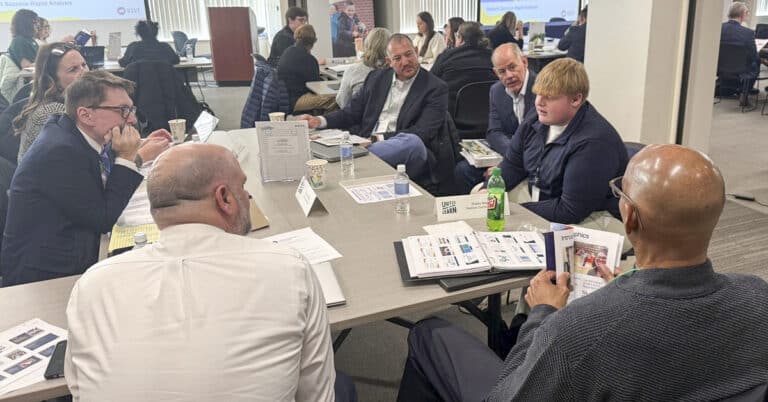
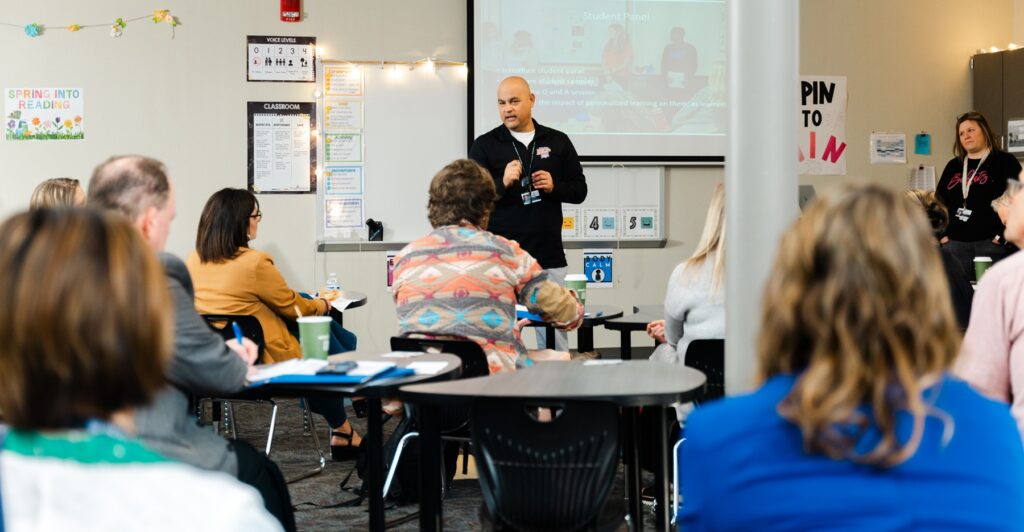
EngageMN is working to unite learner-centered allies across Minnesota to foster collaboration and innovation. With support from KnowledgeWorks, the EngageMN working group participated in a recent visit to North Dakota, where they were offered a glimpse of innovative education in action.
Minnesota leaders stepped into schools further along in the process of implementing learner-centered teaching and learning practices, not to replicate, but to reflect on what they saw. What might this look like in Minnesota? The experience was intended to help members sharpen their own vision of what education could be for Minnesota learners.
According to Spies, shared meaning can provide the foundation of strong personalized learning practices while giving districts flexibility to meet the needs of students and staff. “There isn’t one right way of doing learner-centered education, and that’s the beauty of each district using the foundational framework to make it their own,” she said.
Spies is hopeful that EngageMN can serve as the convener in Minnesota to help establish this shared language and offer opportunities for collaborative learning. “I hope through collaboration, we can create a common vision and resources for implementing learner-centered education and learning in Minnesota […] I’d love to establish opportunities to connect and learn from each other through site visit experiences or communities of practice.”
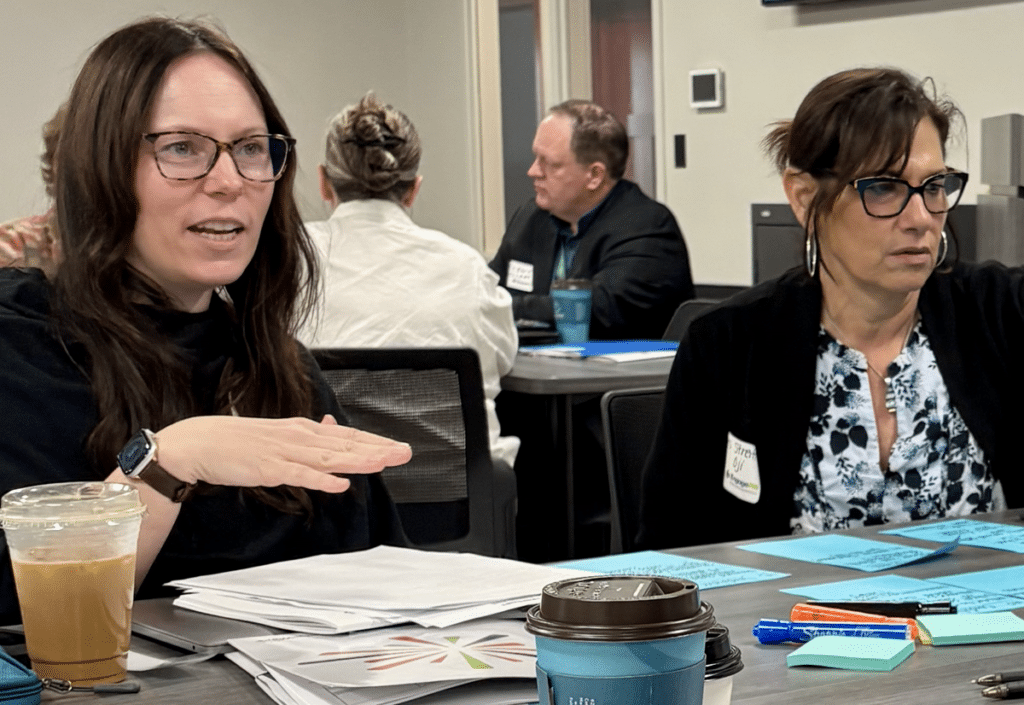
North Dakota is refining and scaling; Minnesota is defining and aligning. Both are doing the essential work of grounding their work in a shared purpose. Through cycles of reflection, goal-setting and continuous improvement, KnowledgeWorks supports these state-based teams as they work to advance the conditions necessary for personalized, competency-based learning.
Starting systems transformation with learner-centered practices
Together, North Dakota and Minnesota help tell the story of systems transformation as a journey, one with multiple entry points and levels of implementation. No matter where a school, district or state might be, there is always a practical place to begin.
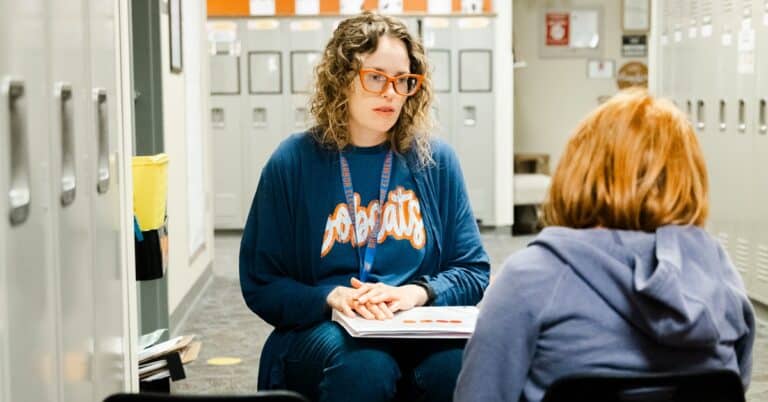
Centering systems around the needs, strengths and aspirations of learners is often the most accessible and meaningful starting point. This is what we mean by learner-centered: designing instruction and experiences that respond to students as individuals, not as averages.
But learner-centered does not automatically mean personalized.
Personalization requires something more. It involves learner agency. Learners have a meaningful role in shaping their goals, their pathways and how they demonstrate success. It’s about adapting instruction for students AND creating conditions where learning is increasingly driven by the learners themselves. Educators remain essential partners and facilitators who help guide, support and challenge learners along the way. Instruction can be learner-centered without being personalized.
Learner-centered approaches are often the necessary foundation for personalization. They represent movement along a continuum, not an endpoint.
KnowledgeWorks’ Finding Your Path: A Navigation Tool for Scaling Personalized, Competency-Based Learning or Vision-Led, Learner-Driven can help communities reflect on where they are in that progression to build shared understanding. The tools make visible the difference between intention and implementation, between aspiration and current practice.
What systems transformation requires to succeed
Systems transformation never looks quite across communities. According to Kyle Anderson, senior manager of systems transformation at KnowledgeWorks, every community starts in a different place, and the goal is never to prescribe a single solution.
“Our goal is just to help teams reflect on where they are and then think about what comes next. Especially in terms of thinking through the structures, strategies and funding needed to ensure sustainability for the work,” Anderson notes.
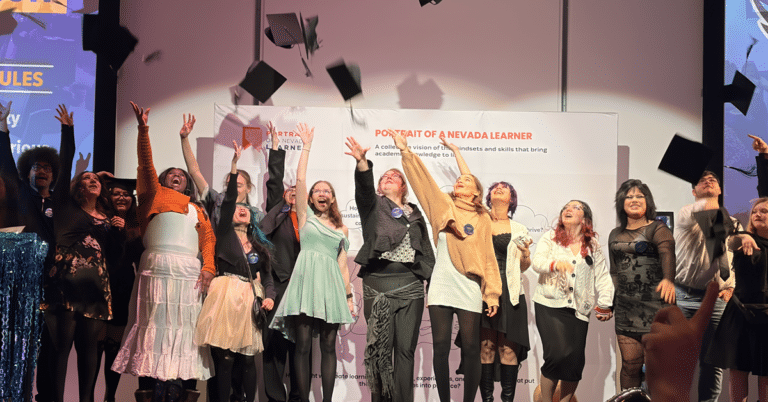
Ultimately, the goal is to move toward systems that genuinely prioritize learners and that let them say where they are, where they’re going, how they’ll get there and what they need to be successful.
Personalized learning is not only centered on students but also driven by them. Getting there doesn’t start with perfect definitions. It starts with clarity of purpose and a willingness to keep refining and redefining, together.