Competency-based learning offers students the freedom to progress at their own pace – but what happens when that pace slows to a crawl? In high school settings, where graduation is still tethered to a four-year timeline, educators must strike a balance between flexibility and accountability.
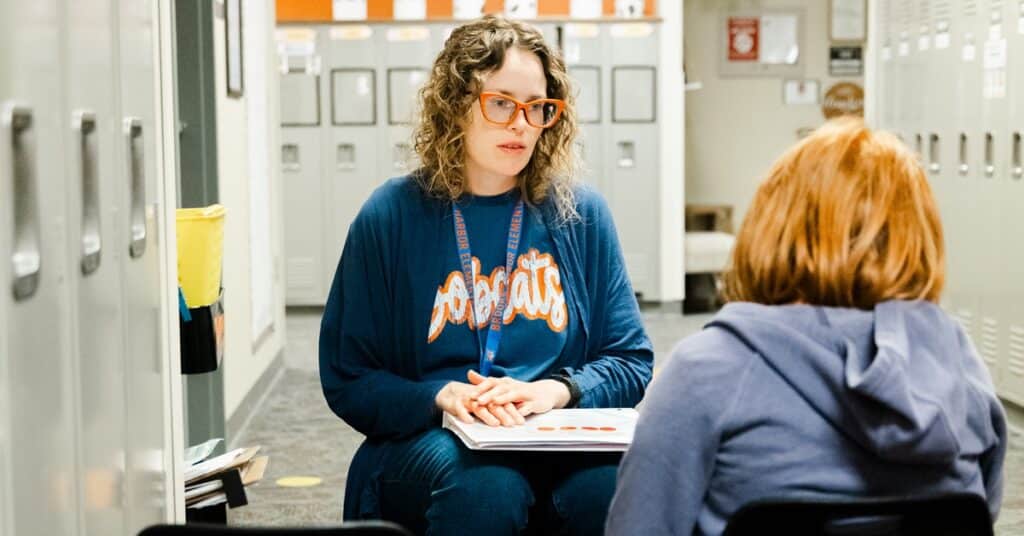
To support this balance, it’s also important that we have both emotional and academic supports in place, so consider your advisory system or model and how it operates and serves your instructional framework.
Here are nine powerful systems and structures that help learners stay engaged, complete graduation requirements and develop the executive functioning skills needed to not only thrive in competency-based learning, but also in life.
1. Co-constructed learning plans with progress monitoring
Empower students by involving them in the creation of their own learning plans. These learning plans should include:
- Clear goals and timelines
- Scheduled checkpoints for progress monitoring
- Opportunities for reflection and revision
This shared ownership builds accountability and helps learners visualize their path to graduation.
2. Embedded time for support
In Bismarck, North Dakota, a high school has cracked the code with innovative scheduling that provides learners with support on demand. Legacy High School wanted to change the system, deciding that time is often a barrier to learning. Implementing a flex mod schedule, where learning became the constant and time became the variable, has increased engagement and more learning opportunities for students. At any time of day, learners can be found in the Saber Center, where time is provided for real-time academic support and connecting with others.
3. Advisory: the heart of the system
A strong advisory model is essential, particularly at the secondary level. Advisory should be the hub where students connect, reflect and plan their next moves. To build or refine your advisory model vision:
- Conduct a gap analysis in a staff workshop — identifying what is currently happening, what you want for the future and what pieces are missing
- Define purpose, clear roles and responsibilities for advisory that align to future views
- Teach a systemic and comprehensive goal-setting process
- Establish what a 1:1 in advisory looks, sounds and feels like
- Align advisory with both emotional and academic supports
- Rethink how your new structures and processes fit within this new framework
This is a time where students should be able to move around, sign up for places to go and/or attend hubs that serve different purposes while at the same time, on other days, it’s a time to meet and assess their learning progress with their advisor.
In Lexington One School District in South Carolina, high schoolers participate in CREW every day. Creating Relationships and Exploring Within, CREW aligns with the core beliefs that every student is safe, feels like they belong and is academically successful. Lakeside Middle School, also in Lexington One, has implemented a model of CREW designed to create culture and allow a space for every student to belong — to feel seen, be connected and be heard. Meeting as the first class everyday, the time fosters a community of learners.
4. Coaching for executive functioning and engagement challenges
When more time doesn’t solve the problem, coaching systems must step in. Consider:
- Targeted support for executive functioning skills
- Personalized interventions for disengaged learners
- Staff training on recognizing and responding to motivational barriers
These supports go beyond academics to address the root causes of stalled progress.
5. Student-led academic review panels
Give students leadership opportunities through academic review panels (or a more student-friendly name). These groups:
- Mentor peers
- Provide feedback on learning strategies
- Help troubleshoot barriers to progress
It’s peer accountability with a purpose – and a great way to build community.
6. Social contracts and flowcharts for learning expectations
Create social contracts with students that outline:
- Expectations for engagement
- Time constraints and deadlines
- A visual flowchart of the learning process
This helps learners understand the system and their role within it, reinforcing accountability and transparency.
7. Gap analysis tools for credit completion
Use tech-enabled gap analysis tools to show students and families:
- What credits are needed for graduation
- How current pace affects graduation timelines
- Strategic next steps for acceleration or support
This transparency helps families make informed decisions and motivates students to take ownership of their learning.
8. Portrait of a Graduate and community agreements
Align your academic culture with a Portrait of a Graduate and community codes. These frameworks:
- Embed executive functioning into learning goals
- Guide instructional design
- Support interventions that address both skills and dispositions
Examples include the Ector County Independent School District Portrait of a Graduate, Kamekameha Schools’ Portrait of a Graduate, Utah’s Portrait of a Graduate and Yuma Union Portrait of a Graduate — all of which emphasize holistic learner development.
9. Summer school as a competency continuation opportunity
In some systems, summer school is a continuation of competency work, not a punishment. In Kalispell, Montana, learners at Linderman Education Center have self-paced opportunities to achieve course competencies and graduate as soon they demonstrate mastery. If more time is needed, embedded structures provide support for advancement during the summer.
Competency-based learning doesn’t mean “no pace;” it means personalized pace with purpose. By implementing these guardrails, schools can ensure that every learner stays on track, feels supported and ultimately graduates ready for what’s next.
Further reading
- Student Learning Communities: A Springboard for Academic and Social-Emotional Development by Douglas B. Fisher, Nancy Frey and John Almarode
- The Advisory Guide: Designing and Implementing Effective Advisory Programs in Secondary Schools by Carol Miller Lieber
- How to Design an Advisory System for a Secondary School by Mark Goldberg