Discover how policies, practices, programs and people are critical to centering student voices
Elevate student voice with actionable methods and inspiring examples
Uncover the four pillars for creating authentic student engagement
Education is a formative part of a child’s life experience and helps shape who they can become and who they want to be.
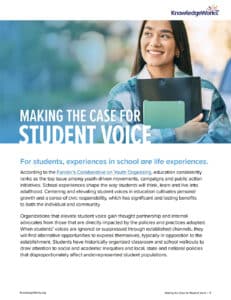
Making the Case for Student Voice delves into the critical importance of empowering students in their educational journey by exploring:
Organizational levers of change
Elements of intrinsic motivation
Explicit and implicit student roles
Methods for elevating student voice
With this guide – using Ohio as an example – policymakers, intermediaries and other decisionmakers can help elevate student voice by getting:
Reflective questions to gauge your organization’s capacity
Practical methods and real-world examples
Opportunities for partnership and engagement
Resources for further learning and exploration
Whether you’re a seasoned educator or a passionate advocate for change, this publication offers the tools and knowledge necessary to drive meaningful progress.
Young people want their voices heard. It’s time we listened.
Download Making the Case for Student Voice today and embark on a transformative journey towards amplifying student voices and shaping brighter futures for all.
Teacher evaluation is one of education’s most influential yet underused levers for systems change, and aligning it with a district’s instructional vision is essential for lasting transformation.
Kentucky is creating a new model for K-12 accountability that combines state support with locally developed measures to better capture the full range of learner success beyond test scores.