Co-authored with Bjourn Etienne, a recent grad from Rensselaer Polytechnic Institute and collaborator of Charting a New Course for Education, with contributions from Emily Brixey
One of the drivers of change explored in Charting a New Course for Education is the relevance gap students are facing in the education system. There is a growing disconnect between what students learn in school and the skills, knowledge and engagement they need for their personal lives, future careers and the rapidly changing world. If schools cannot effectively anticipate what learners might need for their futures, this gap will continue to widen.
Drivers of change: what’s pushing us forward

As people continue to integrate with AI, next-generation artificial intelligence will change how humans think and feel, challenging current notions of skill development and human relationships and requiring new approaches to teaching and assessment.

Everyday disruptions, ranging from small- to large-scale, could upend daily life in school and other learning environments, rendering conventional approaches to educational management and changemaking insufficient to meet emerging needs.

As eroding public institutions are impacted by declining confidence, economic constraints and expanding market-based competition, public education systems could need to redefine the ways they serve learners and communities.

As the relevance gap widens and young people’s realities grow further and further removed from the world of school, education systems face an urgent need to integrate students’ emerging needs, concerns and aspirations into learning.
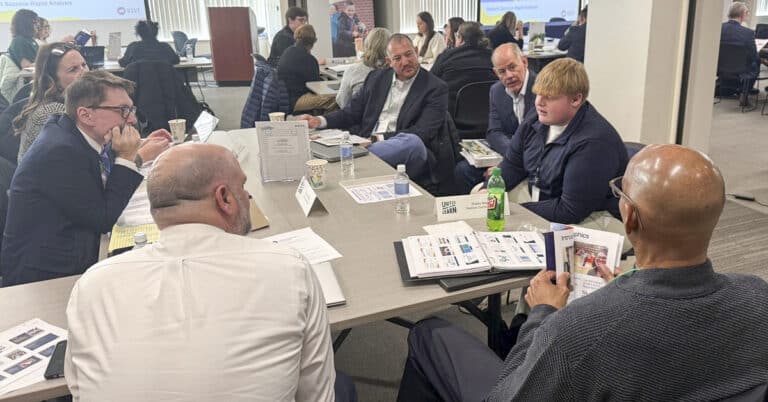
One way to start narrowing this gap is to center student voice. Centering student voice is a commitment to ensuring that the learners and their perspectives, experiences, ideas and concerns are not just heard but are actively sought out, valued and integrated into decision-making regarding their education and the world around them. Students become active agents in their education rather than objects of education. Giving students the ability to have a say in the formulation of their curriculum or anything regarding their education would help in bridging the gap formed by excluding young people. Using co-design to center student voice would ensure a strong connection between what students learn and the tools they need for their personal and professional lives.
What is truly at stake when we embrace or ignore co-design?
The impact of including learners as partners in their learning can be transformative. Learning can become a more collaborative endeavor. Learner engagement can shift from being obligatory to being intrinsically motivated. Students would develop real-world skills like collaboration, communication and critical thinking skills that employers say young people are missing. Co-design is an opportunity for learners to see their education as a toolkit for impacting the issues they care about rather than a series of hoops to jump through. This process can alleviate feelings of powerlessness and disconnection that fuel the relevance gap.
Conversely, when decision-making does not include learners, the resulting decisions perpetuate the very cycle it seeks to break. It risks designing elegant solutions for problems students might not even have, using language that might not resonate, and building systems that feel increasingly archaic. There are already symptoms of this showing up across the education system, such as rates of chronic absenteeism, boredom and disconnection. These are not failures of student character; they are logical responses to a system that too often fails to speak to their lives. Allowing the relevance gap to continue is a choice, one with significant consequences for both the future of learning and society at large.
How might co-design translate from philosophy to practice?
It can range from simple shifts to systemic changes. It can be as immediate as a teacher inviting students to co-create the success criteria for a new project or assignment, ensuring the goals feel attainable and meaningful to them. It can be a school committee including student representatives not as tokens, but as voting members in decisions about school culture and policy[1]. At a systemic level, it means policymakers creating authentic avenues for youth voice to inform curriculum development and strategic planning, moving beyond superficial surveys.
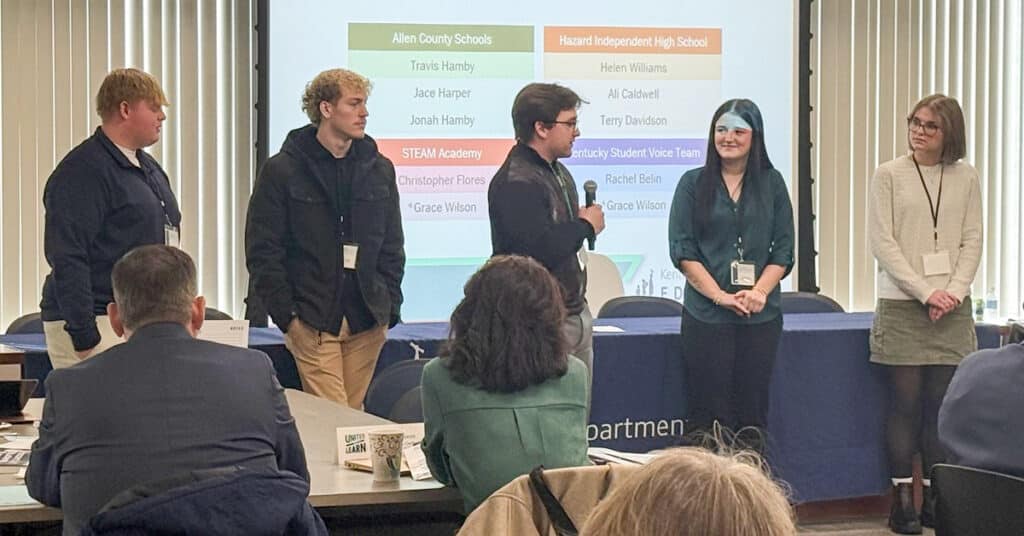
In Kentucky, the United We Learn Council includes students in creating vibrant learning systems where students are agents of their own learning and engaged in relevant, authentic and joyful learning opportunities. As agents of change, the Kentucky Student Voice Team participates in advocacy, policymaking, research and storytelling.
An act in Connecticut requires each school to have a school climate committee with diverse representatives within the learning community, including a group of students that is demographically representative of the school. The committees advise on:
- Strategies to improve school climate and implement evidence- and research-based interventions, including restorative practices, in the school community
- Creating or proposing revisions to the school climate improvement plan
- Engaging the school community in the plan’s implementation at meetings
If educators and policymakers want students engaged, start by including student voice in policies and decision-making that affect them.
Bridging the relevance gap
The relevance gap will not be closed by a new textbook, a new tech platform or a new standardized test. It will be closed by new relationships. The voices of young people are echoing the need for change. Although honoring those voices can be challenging due to systemic constraints, it is critical that education leaders and changemakers do what they can to bridge the relevance gap and give the voices of young people a place to thrive.
To take action, we must shift our mindset. The next time you face a challenge in your classroom, school or district — whether it’s designing a lesson, revising a policy or tackling chronic absenteeism — pause and ask one transformative question: “Who is missing from this conversation?” Bridging the relevance gap starts not with a grand plan, but with a simple, intentional act: partnering with students as co-designers of their own futures. This conversation can start today: right here, right now.