Learning happens across schools, homes and communities. What becomes possible when the people who support learners across those settings work together around a shared vision for learner success?
What is a learning community?
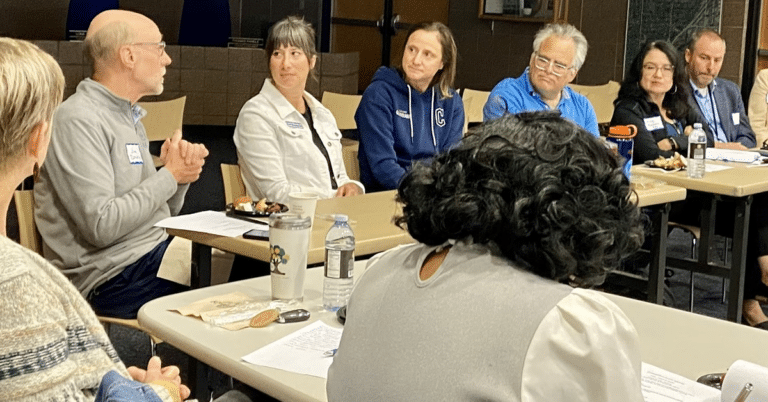
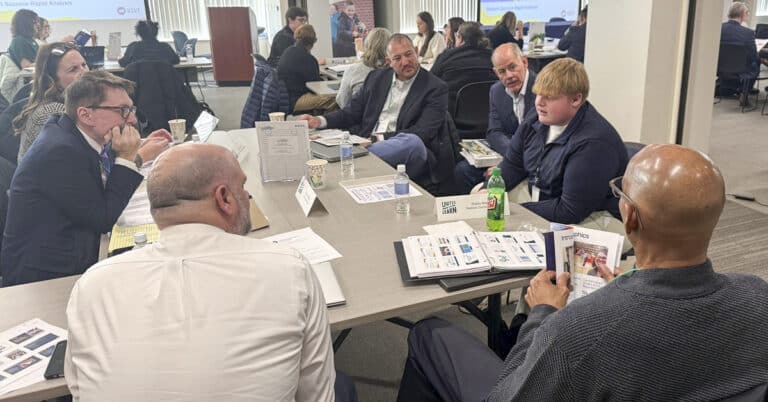
A learning community is a group of educators, learners, families and community partners working together to advance a shared vision for education. A learning community may be a single school, a district or a state — and a shared vision at the state level unlocks possibilities for policy innovation that are not possible without it. The people involved may differ from one place to another, but they share responsibility for creating the conditions in which every learner can grow and thrive.
A learning community is more than a collection of people who care about learners. What connects the group is its shared vision: a common understanding of what learners should know, be able to do and become. That vision gives those in the learning community a reason to coordinate their efforts and helps ensure that decisions about learning reflect the community’s aspirations and priorities. Communities often express this shared vision through a Portrait of a Learner/Graduate. A Portrait identifies the knowledge, skills and attributes that a community believes learners will need to thrive in school, work, their communities and life. Developing it with learners, families, educators, businesses and community organizations can build shared ownership and accountability.
What does a learning community look like in practice?
Imagine a community that identifies communication, collaboration and problem-solving as important outcomes for every learner.
Educators might design classroom experiences that give students opportunities to practice these competencies. Families could reinforce the same skills at home. Businesses and community organizations might offer mentorships, internships or community-based projects through which learners apply their skills in new settings.
Each group contributes in different ways while everyone works toward the same vision.
Strong learning communities also make room for multiple perspectives when setting priorities and making decisions. A shared vision is more likely to guide meaningful change when the people affected by that vision help create it and understand how they can contribute to bringing it to life.
Why does a learning community matter?
When people work in isolation, learners may encounter fragmented expectations and disconnected learning opportunities. A strong learning community helps connect what happens in schools with learning at home and across the community.
These connections help people understand their common purpose and contribute to it through their distinct roles, resources, and expertise.
Supporting learners is a shared responsibility. A learning community turns that belief into coordinated action.