Transforming Education By Organizing Learning Around Young People
Q&A with Colleen Broderick
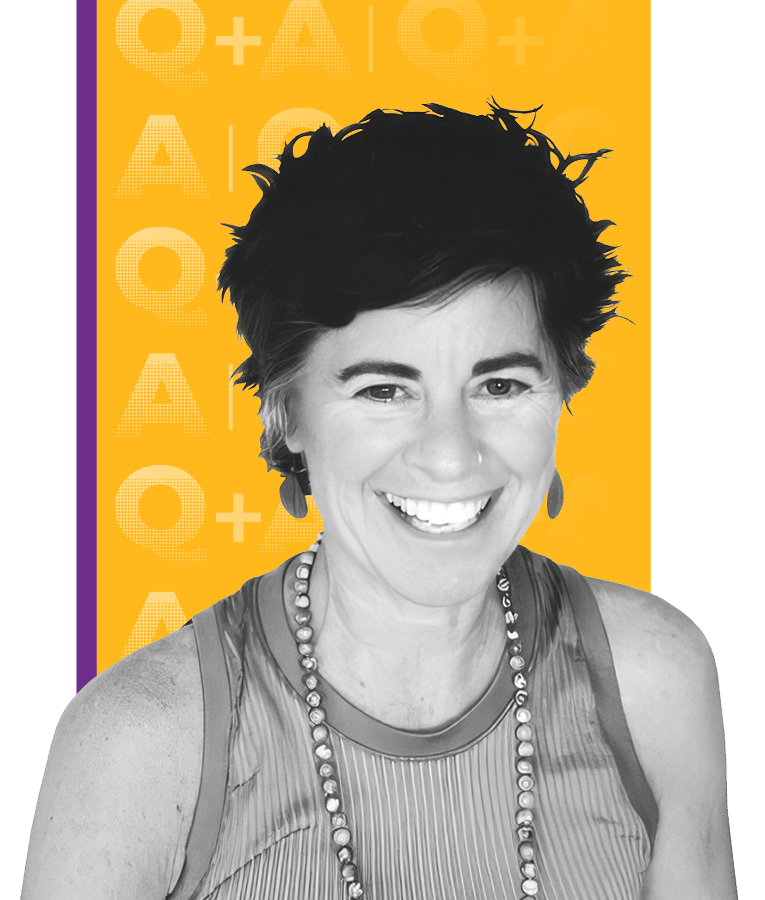
We need to organize learning around young people instead of confining their development and impact to specific educational structures. For that to happen, adults need to examine what they’re willing to learn and change. That’s according to Colleen Broderick, Lead, Learning Design at Playlab. This article reflects her perspective on learner-centered education transformation.
Colleen Broderick helps people create the human, collective and environmental conditions needed for transformative learning. Over three decades, Broderick has worked with students, educators, founders and changemakers across continents. She has launched schools in multiple countries, coached leaders and worked with systems thinkers and practitioners to reimagine what learning can do. At Playlab, she cultivates student-centered artificial intelligence (AI) literacy practices with a focus on responding to it in deeply human ways.
In this conversation, Broderick orients learner-centered education in relation to the guiding question, “Does this learning experience help young people understand themselves, navigate the world and ultimately contribute to it?” Highlighting the power of AI for redesign, Broderick also examines the system dynamics involved in education changemaking. Her perspective underscores that preparing for what’s next begins with empowering young people to act, contribute and shape their learning and make meaningful contributions to their communities today.
How would you define learner-centered education transformation?
I’d start with who young people are. Instead of placing them in a box, I’d begin by asking about their strengths, identities, questions and aspirations and would then organize learning around that. I would give learners meaningful influence over how they learn and demonstrate their growth. I’d also enable them to cultivate strong relationships and support them in making decisions in thoughtful ways. Transformation ultimately means changing the structures around learning: time, assessment, educator roles, decision making and what counts as learning.
In what ways do you see your work contributing to learner-centered education transformation? Can you provide a specific example?
My work at Playlab provides learners with resources that enable them to make impactful contributions in their communities now. We look at generative AI as design material and ask how it might help reshape learning experiences. We’re able to make some aspirations actionable in ways that didn’t exist before and to do that with a lot of thoughtfulness and discernment.
In one example, I did a build-a-thon with students for the Colorado AI Summit. One young woman built an AI application that allowed her, and by extension, other youth, to identify what they cared about and what they were interested in and share a little about their own personal stories. They could then see options for what they might pursue and explore. We’ve been trying to cultivate environments where we get to know learners and support them in following different opportunities for learning. What I found powerful was that she chose to build that for herself. Not every school has access to the resources or the understanding to help learners act on their passions and interests. Now we’ve removed those barriers.
In another example, one student built an app for his first-generation parents after finding out that they didn’t feel confident in voting. He uploaded the issues and voting guide so that his family was able to engage with them in their own language. Other students shared the app with their families. Then NPR got ahold of it, and the app traveled to thousands of voters. It was a perfect example where a student had the tools and resources to address a very personal need and learned that what was personal to him also held value for others. It’s so powerful that we can equip students and educators with another set of design material to act on these aspirations and have such a meaningful contribution in the moment.
What are some promising trends or developments that are contributing to education transformation?
I’m excited about Carnegie’s project to create a credit translation engine that will allow high school students to upload a variety of evidence from learning that happens beyond the school walls, whether it’s through career-technical education programs; experiences they have in clubs, apprenticeships or internships; or simply activities in their neighborhood. This project gives credibility to out-of-school learning and begins to bridge different learning spaces. The badging movement tried to figure out how to verify experiences and communicate their value. This example is powerful because it involves larger public education systems, not just smaller, progressive environments.
What aspects of education seem overlooked, and why do you think that is?
Adult development is often overlooked because people don’t feel the impact immediately, but adults need opportunities to experience a different type of learning themselves. We’re asking them to work differently and navigate some uncertainty and complexity. People can discount the amount of unlearning that needs to happen for new systems to come into existence. We need to create some parallel pathways for adults to build their own paradigm shifts and examine their own stages of development.
We also tend to overlook the conditions that make agency possible, specifically trusted relationships. Things like this take time and they’re hard to quantify. They require us to examine and confront how we relate to power, as well as our habits. Introducing a new program is easier than examining and interrogating the relationship we hold with learners and the power dynamics of the system.
Education Transformation and Student-centered Change
National transformation requires something different: sustained, systems-level work that aligns vision, builds capacity and creates the conditions for change to take hold over time. KnowledgeWorks’ national transformation strategy is designed to support education systems in doing exactly that.
How can we know whether learner-centered transformation is improving young people’s experiences and preparing them for life after school, and what audiences seem most important to convince?
First and foremost, we should be checking in with young people about their daily experience, whether they feel known, whether they believe their work matters, whether they feel able to influence their learning.
We also need to examine what young people can demonstrate beyond very discrete academic content and skills, whether that’s judgment, collaboration or the ability to apply learning in uncertain situations. We need better ways to hold a learner’s story for a longer period.
In terms of who needs convincing, young people and families come first. A lot of schools are looking to ensure that parents feel confident in new models of learning. Then educators need evidence to fuel that shift in practice. I remember needing evidence that I could give up some of the decision-making and trust that students would make good decisions. Having even the smallest experience with learner-centered practices builds evidence of trust and confidence in the learners themselves. After that, policymakers, higher education and employers need enough confidence to support and recognize different pathways.
What assumptions need to shift for education transformation to spread?
We need to let go of the assumption that young people need to wait until some other time to make meaningful contributions to society. Another assumption is that learning only counts if it is witnessed in a certain way, happens in certain environments and is validated by a teacher. Related, we tend to assume that educators should carry responsibility for learning alone.
Another assumption is that spreading transformation means replicating a model. Learner-centered education is so context-based and community informed that there needs to be space for communities to shape their own approaches. We’ve already started to interrogate the assumption that everyone needs to move at the same pace with the same content, but a lot of people still hold onto that.
If you could make one urgent call to action to accelerate learner-centered education transformation, what would it be and who needs to hear it?
Give young people true authority to redesign their learning experience and then resource the adults to act with them. That would be amazing to see at any sort of scale. It would have to start with some of the consequential decisions about how learning is assessed, how time is organized and which challenges young people choose to work on. My primary audience would be school and system leaders because they hold the learning container.
Is there anything additional you want to touch upon or think critical to this conversation?
I keep coming back to the question of what we adults are willing to learn and change about ourselves for any of this to take root. I’ve seen shifts come down to the beliefs that educators hold and what they think kids are capable of.
Perspectives on Education Transformation: KnowledgeWorks is talking about education transformation with education leaders and practitioners across the country working across various disciplines — from research to classroom practice, to philanthropy, policy and futures. Though individual objectives differ, they are collectively working to advance learner-centered transformation from their areas of expertise and influence. Through these conversations, we are gathering ideas, lessons learned and hopes for the future and exploring the opportunities, tensions and questions shaping transformation today. These interviews are part of a yearlong KnowledgeWorks project exploring what it takes to move learner-centered education from promising ideas to meaningful, lasting change.

Recently Added


Related Resources

- Published:
- Topics: Assessment and Accountability, Systems Change


- Published:
- Topics: Future of Learning, Systems Change


- Published:
- Topics: Systems Change