How do we move from time-based learning to skills-based systems that truly prepare learners for the future? That was the question a panel of leaders from foundations, chambers of commerce and school systems tackled at the recent CBExchange conference.
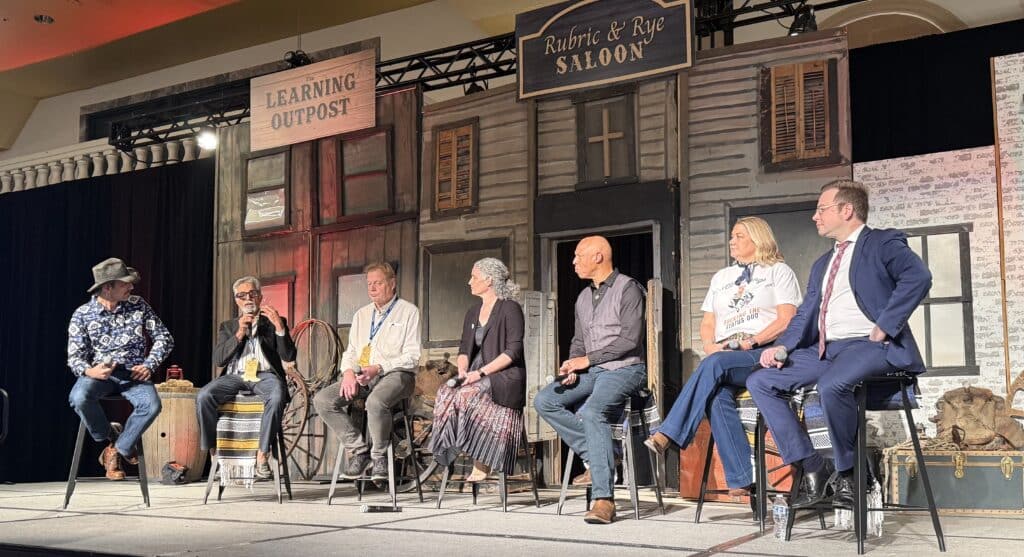
The conversation revealed both the promise and the complexity of this shift. While the idea of competency-based education isn’t new, panelists agreed that progress has been slow, and they explored why.
Why is change so hard?
One reason, several panelists noted, is fragmentation. Employers, educators and technology providers operate in silos, using different systems and languages to define and measure skills. As Ed Sattar, the founder and managing director of Ed Tech Ventures, described it, “It’s not simple. It needs to be cartoon simple.”
We need a system where an employer can enter a few competencies and instantly see candidates who match.
Technology is starting to make that possible. Advances in AI and data interoperability could allow skills to become a “currency” for hiring and learning, enabling employers to match candidates quickly and learners to carry verified skills across jobs and education systems. But building that infrastructure requires collaboration across sectors.
The role of policy and practice
“All states have legislation that allows more flexibility, said Bill Hite, president and CEO of KnowledgeWorks. “We see very few states actually implementing those policies.”
KnowledgeWorks is partnering with states to further create capacity and help them make use of the flexibilities in place.
Panelists emphasized that this isn’t just a technology challenge, it’s a cultural and structural one. The traditional credit hour, created more than a century ago, still shapes how schools and colleges measure learning. “We have to dismantle that,” said Hite. “It’s calcified into corners of K-12 and higher ed, making innovation nearly impossible.”
States are beginning to create more flexible policies, but implementation lags. “There’s a gigantic capacity issue,” Hite observed. “We need to create conditions for educators to learn and grow so they can take advantage of structures that already exist.”
Common language or common ground?
Another barrier is the lack of a shared language for skills. Attempts to create national frameworks have faltered because economies and communities are too diverse for a one-size-fits-all approach. Instead, panelists suggested focusing on validated sub-skills, the building blocks of competencies like collaboration or critical thinking, while allowing local flexibility in naming and emphasis.
Why employers care
From the business perspective, the shift to skills-based hiring is both urgent and complicated. Employers want to hire based on what people can do, not just what degrees they hold. But most lack the internal capacity to organize job requirements around skills. Chambers of commerce are stepping in to help, creating structured processes and tools for employers to align with education providers.
Financing is another challenge. One idea gaining traction: skills savings accounts, similar to health savings accounts, that would let employers and workers set aside pre-tax dollars for short-term, skills-based training. “Once the dollars start following this trajectory, game over,” said Jason Tyszko, senior vice president at the U.S. Chamber of Commerce Foundation. “That’s how you create a market.”
What can institutions do now?
For colleges, schools and local organizations, the advice was clear: start small, start together. Pick a process, any process and begin organizing around skills. Engage employers early, and don’t go it alone. Chambers, states and foundations are creating forums for these conversations; join them.
And don’t forget the learners. “K-12 is too often the last to be brought to the table,” said Hite. For systems to be relevant, we need to work with K-12 and students. We must ask learners what works for them.
Looking ahead
Despite the challenges, the tone was optimistic. Technology is catching up. Policy is shifting. Employers are more engaged than ever. When employers, learners and educators connect around skill development, they can create a talent economy that works for everyone.