As a former educator and school leader, I’ve lived the full spectrum of collaboration: from the surface-level “nice” interactions to the deep, transformative work that shifts systems. And if you’ve ever tried to move a school from pockets of innovation to a culture of collective ownership, you know it’s not easy. But it’s necessary.
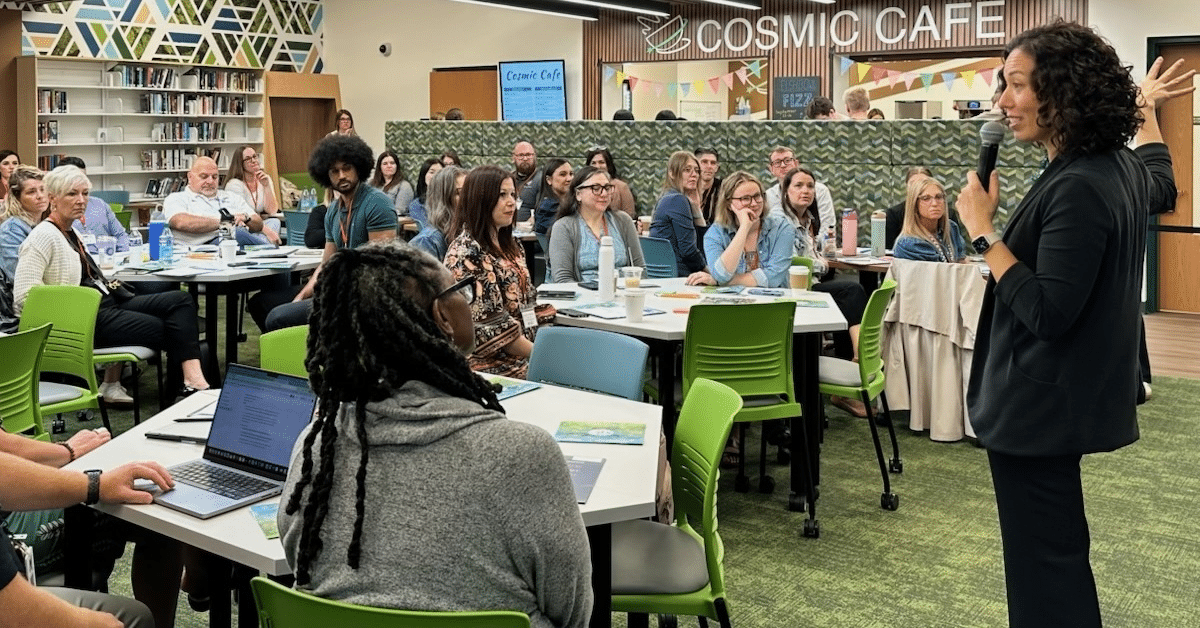
During a recent conversation with educators participating in the Emerging Leaders cohort from Lead for Learners, a national network for educators facilitated by KnowledgeWorks, we revisited Judith Warren Little’s 1982 research on norms of collegiality. Yes, it’s decades old and yes, it’s still painfully relevant. Little explores the continuum from “ostrich” behavior, avoidance and isolation to “joint work,” where educators co-create, reflect and improve together.
What struck me most was how often we think we’re collaborating, but we’re really just coexisting. We share ideas, maybe even materials, but we don’t always share responsibility. We don’t always model the systems we ask our students to follow.
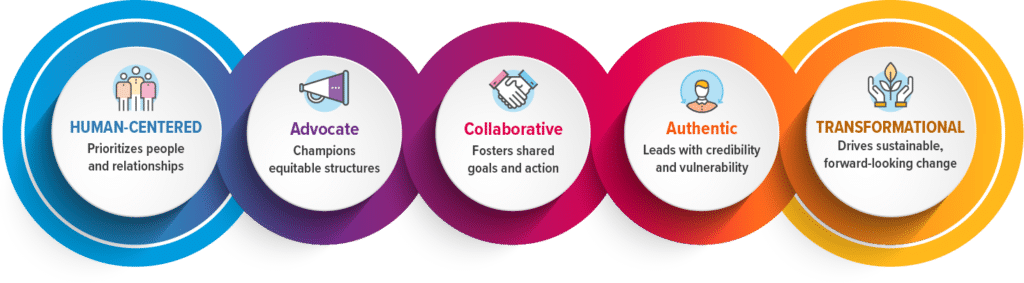
What are the attributes of educator leaders?
This Portrait of a Leader captures the knowledge, skills and dispositions educators need to drive innovation and lead education systems change through personalized, competency-based learning.
Let me tell you a story.
At a school I helped create, we decided to eliminate drinks in classrooms. Students were spilling coffee, soda, water – you name it. So, we did what good educators do: we collaborated. Staff and students co-created a protocol. It was thoughtful, inclusive and clear.
Then came the moment of truth.
A staff member said, “I really need my coffee in the classroom.”
I replied, “We just built this protocol together. Are you saying your coffee is more important than modeling what we agreed on?”
It sounds small, but it wasn’t. That moment illustrated where our plan was flawed, and we had to go back to the drawing board. And in the meantime, the teachers got their coffee and the students kept their drinks.
This is the challenge of authentic collaboration. It requires integrity, consistency and a willingness to prioritize the “we” over the “me.”
Moving beyond collaboration: the power of collective efficacy
Thanks to the work of John Hattie and Jenni Donohoo, we now have a deeper understanding of what lies beyond collaboration: collective efficacy. It’s not just about working together; it’s about believing in our shared ability to impact student outcomes.
Collective efficacy means:
- Creating shared goals and vision
- Believing in each other’s capabilities
- Reflecting on learner evidence to guide next steps
- Holding each other accountable, not just for tasks, but for purpose
At KnowledgeWorks, we call this “collegiality with a purpose.” It’s the intentional shift from individual effort to systemic transformation. And it’s essential for implementing personalized, competency-based learning environments.
Whether you’re a classroom teacher, a building leader, or a district administrator, I invite you to reflect:
- Where are your teams on the collaboration-to-efficacy continuum?
- What structures or norms are helping, or hindering, your progress?
- What’s one “low-hanging fruit” you can influence to move closer to collective efficacy?
Collective efficacy
Learning communities will cultivate a belief in their collective ability to realize levels of impact that make the greatest difference to the outcomes for all learners.
Establishing
Individuals have opportunities to observe and reflect with each other around successes, mistakes and struggles, beginning to work on resiliency Creating a space to allow learning community members to learn about and practice the components of effective relationships (see culture) to build trust and belief in one another
Developing
Growing connections, belief in one another and resiliency through meaningful professional collaboration, problemsolving and decisionmaking that focus on the impacts and effects of all learners Learning community moves beyond a culture of compliance to a collaborative culture where members feel emotionally safe and socially connected
Operationalizing
The learning community believes and values its collective capacity to demonstrate resilience and overcome challenges in order to realize levels of impact that make the greatest difference to the outcomes for all learners
And most importantly: Are you modeling the system you want your students to experience?
Because in personalized, competency-based learning, student agency isn’t just about independence, it’s about interdependence. It’s about building a “me and we” culture. And that starts with us.
Let’s keep pushing. Let’s keep growing. And let’s keep collaborating, with purpose.
Find opportunities to start collaborating with other educators across the country on our national network, Lead for Learners, and continue growing as a transformational leader.