Think about the learners in your class and in your life.
“What are their strengths and challenges in how they Access, Engage and Express™? How do they need or prefer or need to access information, engage with content and express what they know and understand? What are their talents, interests, passions, and aspirations?” – Kathleen McClaskey
Understanding learners doesn’t just help a teacher to better design instruction and materials. It can also offer learners a way to develop agency as they become more and more aware of how they learn best.
Understanding students better through learner profiles
Things to thinking about when getting started on creating personalized learner profiles:
- Focus on knowing your students and helping students know themselves: Before diving into selecting a template, think about what learner profiles are for and how you will use them. A template that is created just for you as the teacher is very different than a template that is designed to help students understand themselves as learners.
- Consider unintentional bias: It is vital to layer questions of how a teacher’s identity and biases can come into play in the classroom on top of the traditional learner profile process to create a space where students feel comfortable bringing their whole selves. It’s not just about uncovering students’ interests. It’s about the why behind those interests and how their experiences have shaped how they answer these kinds of questions.
- Think differently about data: Learner profiles can be an entirely new take on the idea of data notebooks. Why not let students use these to track their own progress, reflect on their learning needs and strengths, and set individual academic and non-academic goals?
- Give the work back: Learner profiles do not need to be one more thing you have to do as a teacher. You don’t have to create 30 binders. Think about how you could help students create their own learner profiles.
- Revisit and revise: Over the course of the year, students are going to change and grow. Allow space for them to record self-reflections on a regular basis. It’s key for learners to engage in this kind of self-reflection on their strengths and their challenges.
Dr. Akuoma Nwadike’s tips for reducing bias in learner profiles
Dr. Akuoma Nwadike, president of Inclusivity Education, recently partnered with KnowledgeWorks to facilitate conversations with what’s now Lead for Learners to help rethink the way we use learner profiles. “How do we address bias in what a learner profile does, or how it is upholding some of the same detriments – telling students what they are or aren’t,” said Dr. Akuoma. “We need the context behind some of these things. It’s not just an inventory.”
It is vital to layer questions of how a teacher’s identity and biases can come into play in the classroom on top of the traditional learner profile process in order to create a space where students feel comfortable bringing their whole selves. It’s not just about uncovering students’ interests. It’s about the why behind those interests and how their experiences have shaped how they answer these kinds of questions. For Dr. Akuoma, that’s a critical consideration – especially if there is a disparity between an educator’s experiences and their student’s experiences.
“If your students are not members of a dominant cultural identity, ask yourselves, are your students showing up as themselves or the version of them that they think the teacher wants? What is it about my students that I’ve never really asked before to get at their authentic selves?” Those students who are not a part of a dominant cultural identity have learned what is and is not accepted or expected. Considerations of diversity and identity, for both educators and learners, are necessary for students to be able to bring their whole selves into the classroom.
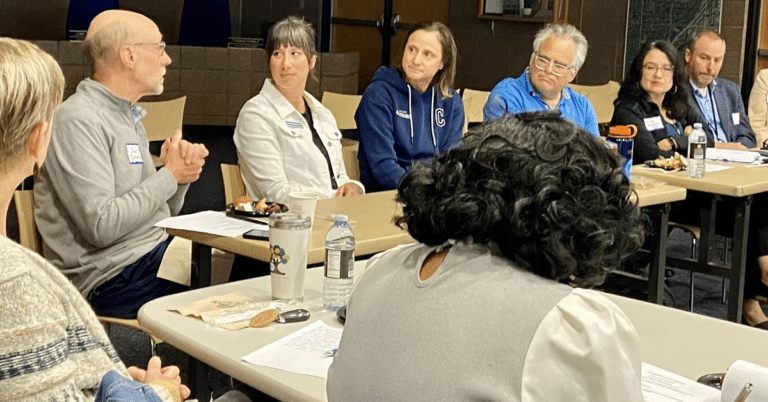
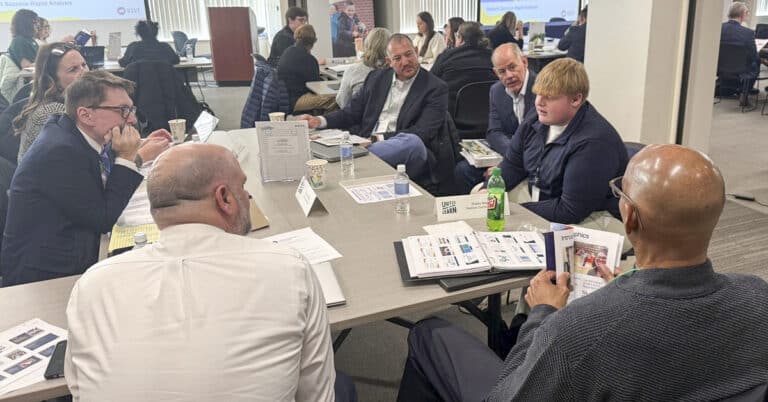
A variety of strategies to refine the learner profile process in support of more equitable and student-centered learning environments were surfaced during the sessions. These included:
- Providing educators with a balanced schedule that allowed for engaging with students at community events, sporting events or with extracurriculars, where they might have the opportunity to see another side of their learners
- Building robust advisory programs for students and teachers to connect and engage in critical conversations
- Creating meaningful platforms for student engagement that can be acted upon, rather than just collected
- Being clear about how learner profiles will be used to inform curriculum and instruction
- Intentionally choosing meeting places that do not reinforce a power dynamic but instead place educators and learners on equal footing
For Dr. Akuoma, the work will always be centered in whatever it takes to see the student as an individual, a whole person.
“Personalization requires you to see the humanity in your students,” Dr. Akuoma said. “They’re not just students, they’re people. ‘Student’ is just a role they have. You have to take the time to explore how identity shows up in classrooms because of who that person is outside of the classroom.”
Resources and templates for creating learner profiles:
- Developing Learner Profiles, New Zealand Ministry of Education
- Getting to Know You: Learner Profiles for Personalization, Education Week
- Welcome to Learner Profiles, Differentiated Instruction Blog
- Learning Genome Cards, Learning Genome Project
- Character Strengths Finder, Learning Heroes
- Empowering Learners™ with The Learner Profile, Kathleen McClaskey