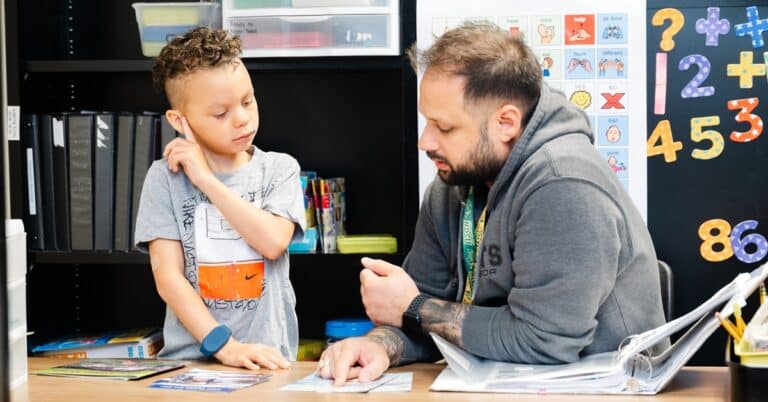
High school seniors Ahmonti and Zander talk with Caliel and Molly about what young people expect from educators and other trusted adults in school, and the best ways educators can support learners.
Listen Now »
High school seniors Ahmonti and Zander welcome Corrin and Sam to discuss the learning methods and teaching styles most effective for young people.
Listen Now »
High school seniors Christine and DeAndre welcome Jennifer and Darren to discuss the characteristics and impact of safe learning spaces.
Listen Now »
High school seniors Christine and DeAndre welcome Camille, Dev and Ezra to discuss the value of peer-to-peer learning.
Listen Now »
High schoolers Sean and Jules welcome Angelina and Gabe to talk about engaging and relevant topics they’ve experienced in and out of school.
Listen Now »
High schoolers Sean and Jules welcome Morgan and Lance to talk about their experiences with virtual learning and how it should be included in the future of education.
Listen Now »
High school students Delena and Henry talk with Aura, Alex and Roma about what equitable, personalized learning means to them, valuing mental and social health, disability accommodation and identity in their experiences. They give advice for students and educators to help advocate for what students need. “They were not very accommodating in dealing with kids who had been through traumatic experiences and who were trying to learn how to be people, let alone having to learn and grow as an individual,” Scott recalled. “I got bulldozed by the system and lost within it.”
Listen Now »
High school student Mohammad joins Delena and Henry to talk about equity around personalized learning, standardized testing, updating curriculum, diversifying after school activities, self worth, and supports during the teacher shortage. Mohammad stresses the importance of listening and mental health.
Listen Now »
Henry is joined by high schooler Brendan to host guests Rishi and Daniel as they discuss equity in education. They discuss how personalized learning supports curiosity so that students can truly learn, social and historical implications in what students learn, cross-content skill development, students supporting other students and classroom management according to class size and class emotional and mental state.
Listen Now »
Junior Ethan asks guests junior Michael and graduates Lee and Jhordan about their experiences, or lack of, personalized learning in school and how equity differs from equality in education means to them. They discuss the pressure and meaninglessness of grades, how meaningful Black teachers are in the classroom – even for White students – and the power of developing a relationship between teacher and student to understand who they are and how they learn.
Listen Now »
Junior Tian hosts this episode featuring sophomores Leonard and Gordon. They discuss what makes learning fun for them, the inequities of tracking and culture of inclusivity and belonging. One common thread: Educators need to ask – and provide – students what they need to succeed.
Listen Now »
Pittsburgh Westinghouse High School freshmen Jasmine, Vaughn, Emanuel and Cameron talk about what they would have loved to see for their own personalized learning experience, creating safe spaces and the vast differences in opportunities and media representation between schools in the same district. “There’s an obvious difference in equality for different schools, but I also think it’s a big part of the state of mind of students,” Vaughn offers. “When they come to school, they either feel like it’s a punishment or it’s an opportunity. Schools need to make it more apparent that it’s an opportunity and an advantage to go to school and learn something new.”
Listen Now »