Transforming K-12 education systems and structures requires strong and effective leadership. This is true whether a leader is working at the state level to implement the policies needed to spur transformation or creating the district conditions necessary for scaling success.
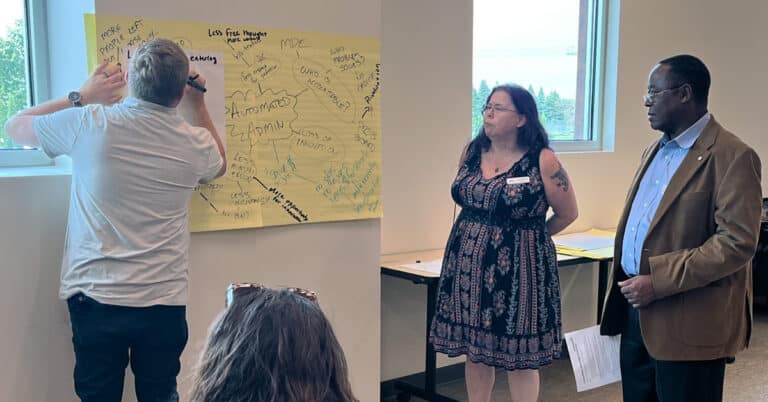
In July, a powerful conversation, led by KnowledgeWorks, unfolded in New Orleans at the Southern Regional Education Board’s annual convening among education leaders working to advance personalized, competency-based learning in their states and communities.
Stephanie DiStasio (South Carolina), Jennifer Echols (Arizona) and Lu Young (Kentucky) joined together to reflect on the role of leadership in driving systems transformation, sharing lessons learned, persistent challenges and the conditions that make meaningful change possible. Several key themes emerged, discussed below.
Four key themes across states leading education transformation
1. Creating a shared vision
This is a key first step that any leader seeking to transform education must take. Panelists spoke about the importance of honoring local needs and building on the strengths of their communities. Echols discussed how student disengagement post-COVID in Mesa, Arizona sparked interest from district leadership in thinking differently about learning. The district leveraged its Portrait of a Graduate, created in 2019, to underscore the importance of durable skills. DiStasio noted that while South Carolina already had a Portrait in place as early as 2012, under the leadership of then-Superintendent Molly Spearman, the goal shifted to bringing that Portrait to life. Young shared that the work in Kentucky has long been fueled by a shared desire among leaders and the community to make learning more joyful, meaningful and vibrant for students.
2. Effective communication
Having a bold vision is only the beginning. Turning that vision into reality requires effective communication. Without buy-in from those most affected by change, even the most promising efforts will fall flat. Kentucky communities have been reimagining learning for years, most recently through the state’s Local Laboratories of Learning (L3) initiative. Young emphasized that this work in Kentucky is successful because it’s deeply inclusive and locally led, engaging teachers, employers and students in shaping the future of education. Echols expressed agreement about the importance of community engagement, highlighting how student leadership ensures that efforts in Mesa remain grounded in student needs. She also emphasized the importance of communication with families to ensure they both understand and buy into the changes being made. Across all three panelists the message was clear: communication, trust and shared ownership are essential in supporting and sustaining transformative change.
3. Leading implementation
A vision and effective communication are critical, but without bold leadership to drive implementation transformation can stall. DiStasio shared how the creation of the South Carolina Office of Personalized Learning in 2017, catalyzed action. The office became a hub for innovation, helping the state develop prototype competencies and clarifying how districts could best use state policy flexibilities to drive change. Both Echols and Young agreed with DiStasio on the importance of leadership in helping schools and districts not only recognize flexibilities, but also in taking advantage of them. Echols specifically spoke about the importance of leadership in aligning rules governing flexibilities with their intent, pointing out that without clear guidance, even well-meaning rules can inadvertently discourage innovation.
4. Systemic change
Vision, communication and implementation leadership can only get you so far. For true systemic transformation to take root and endure, leaders must build systems that outlast any one person or position. DiStasio underscored the need for dedicated time and resources at the state level to make the necessary shifts systemic. Echols emphasized how the district’s human capital systems were redesigned to ensure that leaders across the system are aligned to vision and equipped to carry it forward. Young spoke to the importance of building community ownership as the ultimate safeguard for sustainability. When students, families and local leaders are invested, the work can weather leadership transitions and policy changes.
A leader’s path forward
The insights shared during the conversation illuminates a clear path forward, not just for the states represented, but for leaders in any learning community that is committed to reimagining what’s possible for students. Transformation begins when leaders and communities come together to co-create a shared vision and take deliberate steps to bring that vision to life. That journey requires more than inspiration, it demands sustained leadership, clear communication and thoughtful implementation. Building systems that last doesn’t happen by chance, it happens when leaders remove barriers, build trust and embed innovation into the system itself.