Across Minnesota, a powerful shift is taking place. Diverse voices are coming together under a shared vision: to reimagine education so it works better for every student.
This is EngageMN, an unprecedented alliance of young people, educators, district leaders, policymakers, advocates and higher education institutions working in partnership to accelerate the move toward student-centered learning in the state. The alliance is rooted in the simple idea that through partnership and collective action, sustainable systems change is possible.
Forming a movement with momentum
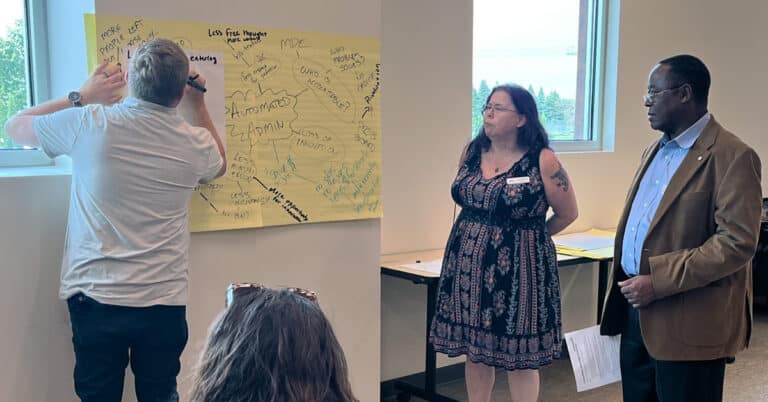
It started with conversations – small ones, at first. People from different corners of the education ecosystem began sharing ideas, frustrations and dreams. They quickly found common ground in their desire to break free from the traditional and outdated model of education and build something instead that was more equitable, innovative and responsive to the needs of learners.
Those conversations grew into a movement with the help of KnowledgeWorks and funding from a Bush Ecosystem Grant – transforming isolated conversations about student-centered learning into a unified movement. Prior to this effort, interest was growing rapidly but remained fragmented among individual districts, nonprofits and advocacy groups without any guiding force. With the support of the grant and the expertise of KnowledgeWorks, the vision to create a statewide coalition that could champion student-centered learning at both the state and local levels began to take shape.
As the coalition has grown, so has its influence.
Through regular meetups, shared stories of success and regular updates on key initiatives, EngageMN partners have started to align their projects and lift-up each other’s work. Superintendents have learned from student advocates. Community organizers have connected with district leaders. What has emerged is an alliance with momentum.
Former students supporting legislation that supports students
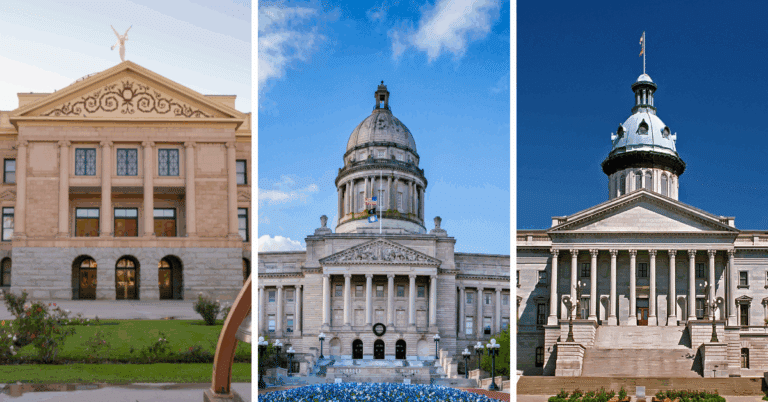
That momentum carried them into the legislative session, where the group set its sights on a bold policy initiative: HF 1607 / SF 2250, a bill that would allow 10 pilot districts across Minnesota to grant academic credit for real-world learning experiences outside the traditional school day. It was a chance to bring student-centered learning to life in tangible, scalable ways.
In March, the alliance mobilized. Across four legislative hearings – two in the House, two in the Senate – students, district leaders and community members came together to testify in support of the bill. Each person brought their own story but a single message that it’s time to reimagine how and where learning happens in Minnesota.
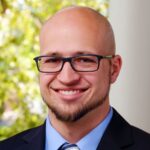
Former students, including Julian Spencer, shared personal experiences of feeling disengaged in school, of how hands-on, interest-driven learning outside the classroom would have altered their learning experience for the better.
Julian Spencer knows firsthand what it feels like to be disengaged from school and what it takes to turn things around. A proud graduate of North High School in Minneapolis, Spencer became a father at 16 and found himself involved in the criminal justice system at a time when school felt irrelevant to the challenges he was facing. Now 21, he leads Good Trouble, a Minnesota movement that cultivates youth leaders to redesign learning experiences that are rooted in belonging and real work.
As an advocate for more career-connected, real-world learning opportunities in Minnesota schools, Spencer believes that a different kind of education, one that counts hands-on experiences toward instructional hours, could have made all the difference in his life. In his own words:
[…] I’m here because I was very unmotivated and disengaged by my middle and high school experience. Like a lot of other young people, I felt like schools were not for me. Too many young people in Minnesota are disengaging from school–in part because the old classroom/textbook model fails to meet their need for real, purposeful work skills and experience they see as relevant to their future. I know firsthand how a lack of engaging learning options can push students away from school.
As a 6th-grader, I went from the classroom to the courtroom. I spent the next few years getting into trouble on the streets and in the justice system. Becoming a father at 16 sparked my desire to be a role model for my daughter and helped me find my purpose supporting other youth to avoid similar struggles.
Many of my friends and classmates weren’t so lucky.
Right now, Minnesota’s lack of a clear definition of “instructional hours” is a barrier preventing public schools from providing more flexible, real-world learning experiences that could keep students like me engaged and motivated. HF 1607 would clarify this definition, allowing schools to expand learning beyond the traditional classroom model while maintaining oversight and student protections.
We know that when young people don’t find purpose in school, they find it elsewhere – on the streets, in unhealthy online spaces, or disengaging from education altogether. In north Minneapolis, less than 20% of African American high school students attend school consistently, according to the latest state data.
We know that learning happens in many ways, not just through lectures or seat time. In places like north Minneapolis, young people are hungry for internships, apprenticeships, project-based learning and other engaging learning experiences outside the classroom. HF 1607 would encourage districts and schools to use innovative ways of meeting student needs, motivate our learning and prepare us for bright futures.
Student disengagement is a crisis in Minnesota and across the country. The time to act is now, and HF 1607 is a major step forward.
Thank you all for your time and support.
Following Spencer’s powerful testimony, district leaders shared how they’re already embedding student-centered practices into their schools, highlighting how the proposed bill would give them the flexibility to deepen and expand that work. Their stories echoed a shared commitment to creating more relevant, real-world learning experiences for every student.
By bringing together voices from across the education landscape, EngageMN is helping to build a broad coalition for change that is grounded in lived experience and a vision for a more equitable, future-ready system.